
Ceramic-Grade Silicon Carbide Supply
Silicon Carbide for Ceramic Applications
FerrumX manufactures and supplies black and green SiC powder, graded fractions and reviewed particle-size blends for industrial ceramic production. We match the offer to your chemistry, PSD, forming route and order requirements.
Black & GreenSiC material options
70–99%Approved SiC range*
F8–F1500Available size range*
Batch QCAgreed test parameters

Own Production
SiC manufacturing and processing
Particle Control
Grains to fine powders
Batch Testing
Chemistry and PSD as agreed
Export Supply
Packing and documents reviewed
Ceramic Applications
Applications of Silicon Carbide in Ceramic Manufacturing
FerrumX supplies SiC powders and graded fractions used by ceramic manufacturers to produce wear-resistant, high-temperature and corrosion-resistant components.
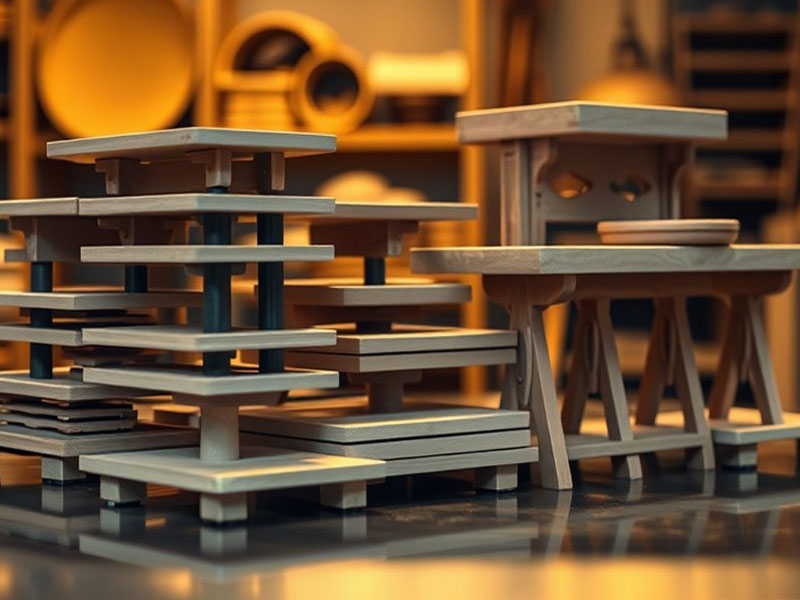
Kiln Furniture & Furnace Parts
Setters, saggers, beams, rollers, burner nozzles and other heat-resistant ceramic shapes.

Seals, Pumps & Heat Exchangers
Components requiring wear resistance, thermal conductivity and chemical stability.
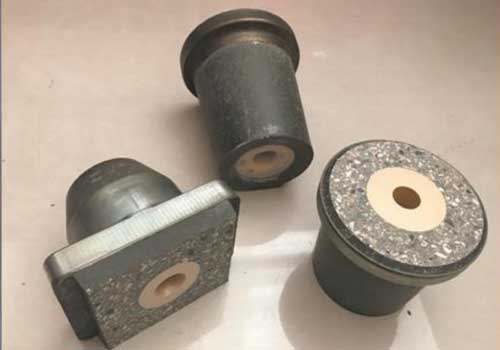
Liners, Nozzles & Bushings
Ceramic bodies exposed to abrasive particles, slurry and repeated mechanical wear.

RBSiC, SSiC, RSiC & Foam Ceramics
Coarse and fine particle systems selected for the forming and sintering route.
Material Advantages
Advantages of Silicon Carbide Ceramics
Silicon carbide combines high hardness, wear resistance, high-temperature stability, thermal conductivity, low thermal expansion and chemical resistance. Actual performance depends on grade, density, porosity and manufacturing route.
High Hardness
High hardness and abrasion resistance support seals, liners, nozzles and parts exposed to particle erosion.
High-Temperature Stability
Selected SiC ceramic routes retain useful strength under elevated temperatures and repeated thermal cycles.
High Thermal Conductivity
Rapid heat transfer can reduce local hot spots in heat exchangers, kiln systems and thermal equipment.
Low Thermal Expansion
Low expansion supports dimensional stability and thermal-shock resistance when the component is correctly designed.
Corrosion Resistance
SiC resists many corrosive media, but compatibility must be checked against temperature, concentration and bonding phase.
Low Density & High Stiffness
A useful stiffness-to-weight balance for industrial structural ceramic components.
Ceramic SiC Types & Grades
Types of Silicon Carbide for Ceramics
The ceramic grade is defined by the bonding or sintering route, powder purity, particle-size distribution and additive system—not by the name “SiC” alone.
Ceramic Grade
Reaction-Bonded SiC (RBSiC)
Usually requires a controlled coarse-to-fine distribution with impurity limits suited to the infiltration process.
Typical Feature
Low firing shrinkage and suitability for large or complex shapes; the fired body contains residual silicon.
Route Input
Existing formulation, PSD, carbon addition, forming method and firing profile.
Powder Focus
Particle packing, green density, infiltration behaviour and agreed impurity limits.
Selection Rule
Confirm the grade through formulation trials and finished-product testing under the customer’s production conditions.
Ceramic Grade
Sintered SiC (SSiC)
Typically uses fine, higher-purity powder with a controlled surface condition and carefully defined coarse tail.
Typical Feature
High density, exceptional hardness and strong corrosion resistance without residual free silicon.
Route Input
D10, D50, D90 or top cut; oxygen and free-carbon limits; additives and target density.
Powder Focus
Fine-powder consistency, agglomeration, surface condition and densification response.
Selection Rule
Confirm the grade through formulation trials and finished-product testing under the customer’s production conditions.
Ceramic Grade
Recrystallized SiC (RSiC / ReSiC)
Usually combines a coarse particle skeleton with a fine fraction selected for packing and green-body behaviour.
Typical Feature
Open-porosity route with strong high-temperature stability and low thermal mass.
Route Input
Coarse/fine ratio, forming method, firing temperature and target porosity.
Powder Focus
Packing structure, impurity limits, green strength and open-porosity target.
Selection Rule
Confirm the grade through formulation trials and finished-product testing under the customer’s production conditions.
Ceramic Grade
Nitride-Bonded SiC (NBSiC)
SiC grains or powders must be reviewed together with the nitride-forming binder and nitridation route.
Typical Feature
Composite route combining SiC grains with a silicon-nitride bonding phase.
Route Input
Grain size, binder system, nitridation profile and target porosity.
Powder Focus
Size distribution, binder compatibility and repeatable nitridation behaviour.
Selection Rule
Confirm the grade through formulation trials and finished-product testing under the customer’s production conditions.
Ceramic Grade
SiC Foam Ceramics
Fine powder and oversize control influence slurry stability, coating quality and the final open-cell structure.
Typical Feature
Porous structure with low density and high permeability.
Route Input
Pore density, slurry system, replication route and firing conditions.
Powder Focus
Slurry rheology, coarse-tail control, coating uniformity and cell openness.
Selection Rule
Confirm the grade through formulation trials and finished-product testing under the customer’s production conditions.
Grades of SiC for Ceramics
Ceramic Silicon Carbide Grades
Select the SiC grade according to purity, ceramic process and finished-component duty. FerrumX reviews chemistry, particle size and acceptance criteria before quotation.
| SiC grade | Primary characteristics | Typical ceramic use |
|---|---|---|
| Black Silicon Carbide (C) | High hardness, wear resistance and thermal conductivity, with a practical cost-performance balance. | Raw material for abrasive and cutting tools, wear-resistant ceramics, kiln products and general industrial ceramic bodies. |
| Green Silicon Carbide (GC) | Typically over 99% purity, with tighter impurity control for fine and precision ceramic processing. | Raw material for fine ceramics and high-precision applications, including semiconductor-related ceramics supplied through cooperating enterprises. |
| Reaction-Bonded Silicon Carbide (RBSC) | Durable SiC–silicon ceramic route with low firing shrinkage and suitability for large or complex shapes. | FerrumX supplies SiC raw material for kiln furniture and high-stress ceramic components manufactured by downstream customers. |
| Sintered Silicon Carbide (SSiC) | Exceptional hardness, high density and strong corrosion resistance without a residual free-silicon phase. | FerrumX supplies SiC raw material for mechanical seals, pump components and wear parts manufactured by downstream customers. |

Production & Processing
Production of Silicon Carbide for Ceramics
FerrumX produces silicon carbide and processes it into grains, powders and classified fractions for ceramic manufacturers. Customer forming and sintering take place downstream.
Acheson Furnace Production
Quartz and carbonaceous raw materials are reacted at high temperature to produce SiC crude according to grade requirements.
Crushing & Milling
Selected SiC crude is processed into coarse grains, fine powders and required particle forms.
Classification & Blending
Fractions are classified and prepared against the agreed grit designation or particle-size distribution.
Batch Testing & Packing
Applicable chemistry and size parameters are checked before lot identification and export packing.
Testing & Inspection
Testing of Ceramic-Grade Silicon Carbide
Batch acceptance focuses on chemistry and particle characteristics that influence ceramic processing. Test methods and COA fields are agreed before production.
Chemical Composition
ICP-OES analysis can report the agreed chemistry and impurity fields for the selected grade.
Particle-Size Distribution
Laser diffraction or sieve/grit methods are selected according to powder size and purchase standard.
Physical Powder Checks
Moisture, bulk density, tap density, BET surface area or other fields are included where confirmed.
COA & Lot Records
Lot identification and applicable TDS, SDS and COA fields are supplied as agreed for the order.
Technical Parameters
Ceramic-Grade SiC Raw Material Parameters
The following FerrumX composition grades are reference supply options for ceramic buyers. The final TDS and COA must state the selected grade, particle size and laser particle-size test requirement.
| Grade | SiC | Free Carbon | Fe₂O₃ | H₂O | Typical ceramic route |
|---|---|---|---|---|---|
| 99# | ≥99.00% | ≤0.10% | ≤0.10% | ≤0.10% | High-purity and semiconductor-related ceramic raw material |
| 98# | ≥98.00% | ≤0.25% | ≤0.30% | ≤0.30% | Kiln furniture, precision ceramics and selected RBSC routes |
| 97# | ≥97.00% | ≤0.30% | ≤0.40% | ≤0.30% | Advanced ceramic formulations subject to process review |
| 95# | ≥95.00% | ≤1.00% | ≤1.00% | ≤0.30% | Cost-controlled industrial ceramic and refractory bodies |
Available Forms
Powder, Grain & Lump
Fine powder, classified grain, lump material and custom particle-size blends are available.
Macrogrits
F8–F220
Reference macrogrit supply range from approximately 2,000 μm to 45 μm.
Microgrits
F230–F1500
Reference fine powder range from approximately 32 μm down to submicron material.
Particle Testing
Laser Method
Ceramic-grade particle-size distribution is tested by the laser method against the agreed reporting fields.
Custom Blending
Reviewed PSD
Custom coarse/fine particle-size blends can be prepared after specification review.
Acceptance
TDS + COA
Final chemistry, PSD, packaging and acceptance fields are confirmed in the quotation and batch documents.
RFQ Checklist
Information Required for a Quotation
A complete request lets sales, production and quality teams review the same acceptance basis.
Purchasing FAQ
FAQ
Short answers to the questions that most often affect product selection and batch acceptance.

Choose according to impurity limits, process sensitivity, performance needs and budget. Green SiC is normally selected when over 99% purity or tighter contamination control is required; black SiC fits many cost-sensitive industrial ceramic formulations.
FerrumX supplies SiC powder, grain, lump and custom particle-size blends. We do not supply finished ceramic components.
No. Powder chemistry and PSD influence processing, while finished performance also depends on formulation, forming, firing, machining and component design.
Yes, for the applicable parameters agreed before ordering. The exact chemistry and laser particle-size reporting fields must be confirmed for the selected grade.
Yes. All listed ceramic SiC products can be sampled. Samples are normally prepared in 1–3 days, and the customer pays freight.
The minimum order quantity is 500 kg. Normal order lead time is approximately 20 days and is reconfirmed according to grade, particle size, quantity and packaging.
Yes. FerrumX offers full customisation across all product lines: custom SiC purity grades (60–99%), custom grit sizes (FEPA, JIS, ANSI, or bespoke distributions), custom grain shapes (cubic/blocky or sharp-edged/angular), custom bulk densities, and custom refractory formulations. For nitride materials, we can adjust Si₃N₄ content, free iron levels, and nitrogen content. Our R&D team co-develops customer-specific formulations with strict confidentiality.
